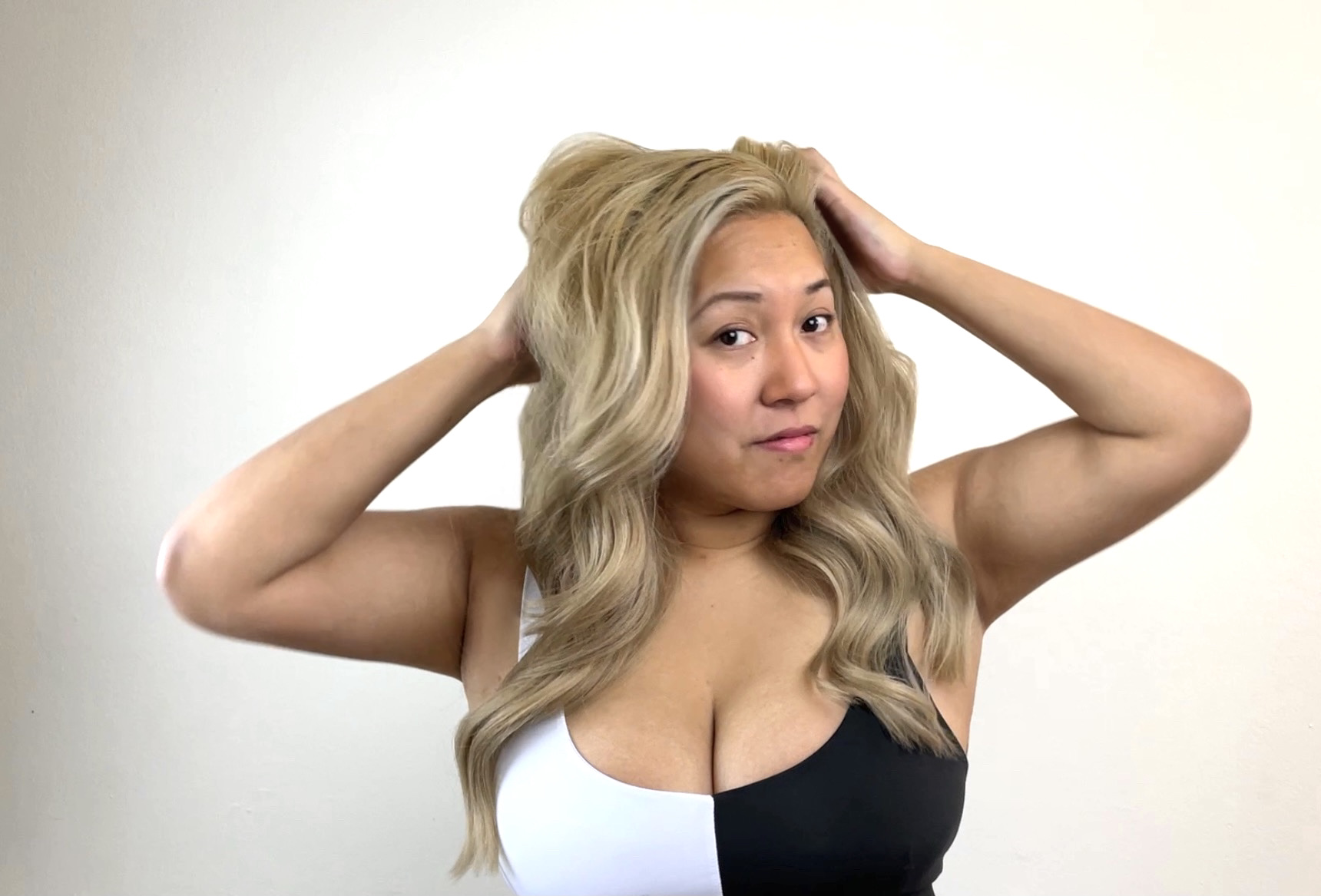
I remember being in grade school and seeing my friends’ moms buying Clairol Nice ’n Easy to touch up their roots. It was a totally foreign concept to me. I started looking at the boxes in the store and noticed they showed base hair colors and the results you could expect after dyeing. The darker bases only went so much lighter.
That’s when it clicked that going blonde was never going to be a “dye” situation for me. At the same time, I had seen Asian women with lighter hair, kind of. It was the 90s, so not exactly common, but it existed enough for me to wonder how they were doing it.
When I Actually Saw What Was Happening
It wasn’t until I got highlights for the first time that I understood what was actually happening. That’s when I saw bleach being used to lift my hair, and then something else happening after to get the color where it needed to be. That moment made it clear this was a process, not a product.
At the time, I thought anything that went on your hair was just “dye.” And technically, yes, it is. But it doesn’t behave the same way. We had just spent all that time getting my hair light enough, and then I watched something that looked dark go right back over it. I remember thinking that didn’t make any sense. It was toner!
What stood out to me was how exact the process was. The toner always looked too dark in the bowl, and then somehow it would come out exactly how it was supposed to. It’s magic.
This was also the point where I realized that going blonde wasn’t something you just pick off a shelf. It was something being built step by step, which is very different from how I originally understood it.
When I Started Noticing the Cost
When I was just getting highlights, I didn’t notice much damage. My hair behaved the same way and didn’t really give me problems. It wasn’t until I started getting balayage that I saw a difference.
The results were beautiful, but it took a lot more bleach than I was used to seeing on my hair. After it was washed out, I noticed more hair in the brush than usual. That’s when it really hit me that this process comes with a cost, and not just in the way I expected.
More product is being used, which means more time in the chair and more money being spent. At the same time, more of my hair is being pushed to lift, which means more of it is taking on some level of damage. It’s not dramatic all at once, but it adds up.
When I got my first scalp bleach, even though it became more maintenance, the idea didn’t really change. It was still bleach to lift the hair and toner to bring it back to something wearable. The difference was how much more of my hair was involved in that process.
There isn’t really a version of going from dark Asian hair to blonde that doesn’t involve some level of damage. You can manage it, but you don’t really get to avoid it.
Getting Blonde Isn’t a Dye Situation
There is no version of this, at least not one I’ve experienced, where dark Asian hair goes blonde without bleach and toner working together. That’s just the reality of it, and it’s something I understood early but didn’t fully grasp until I went through it myself.
It’s costly and it’s damaging, and both of those things show up in ways that aren’t always obvious at first. That’s where a lot of the learning actually happens.
Conclusion
Once I accepted that, I stopped trying to work against it and started working with it. That shift made more of a difference than anything I could have changed about the process itself.
Going blonde isn’t about finding the right dye. It’s about understanding what’s actually happening and maintaining it in a way that makes sense for you.
Leave a Reply