How This Even Became a Thing
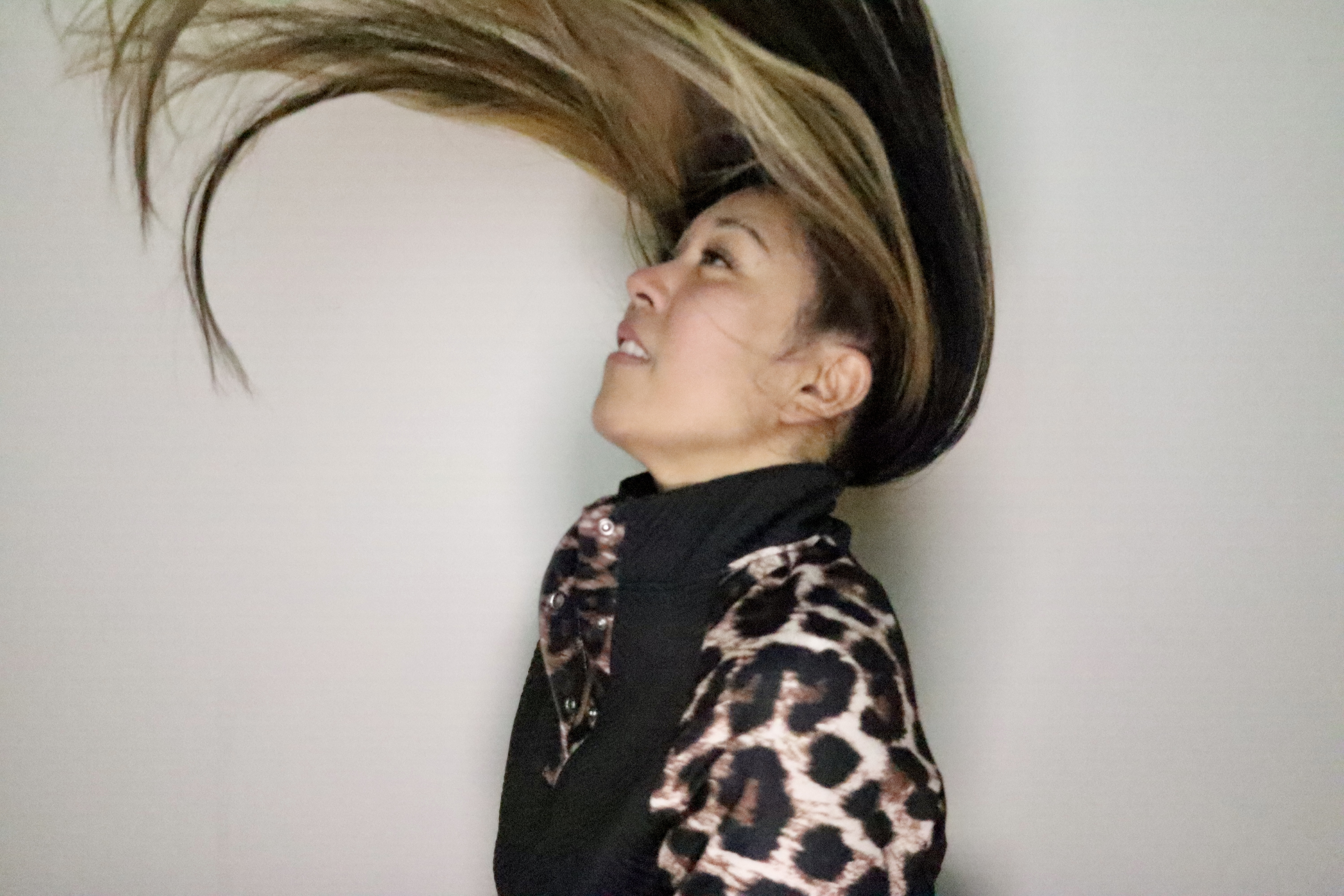
People notice when an Asian woman is blonde.
Sometimes it’s subtle. A double take. A quick question about whether the color is natural. Occasionally someone just blurts out that they’ve never seen an Asian woman with hair that light in real life before.
After a while you get used to it. Sort of.
Growing up, I watched my Caucasian friends change their hair color whenever they felt like it. Highlights one year, darker the next, sometimes red just because they were bored. I remember feeling jealous of how easy it seemed for them.
Even as a kid I understood that my hair didn’t work that way. I didn’t know the science yet, but I knew it wasn’t as simple as grabbing a box dye from Sally’s and calling it a day. (I do not recommend that approach.)
What I wish more people understood is the amount of time, money, and decision making that sits behind blonde hair when your natural color is extremely dark. Blonde hair on naturally black hair is not a casual choice. It’s a commitment. For me, being blonde also became tied to identity, culture, and growing up as a Filipino + American kid with an immigrant parent who saw the world differently.
This also ended up being something more complicated than just a hair color decision. As an Asian + Filipino woman growing up in the 90s with an immigrant mother raising me alone, the idea of going blonde wasn’t exactly encouraged.
Her logic was simple. God made me the way I am, so why mess with that?
At the time it felt unnecessary at best and questionable at worst.
But things change over time. Curiosity turns into experimentation. Experimentation turns into habit. Eventually the thing you tried once becomes the way people recognize you.
At this stage of my life, blonde hair is no longer an experiment. It’s just part of who I am.
If you want the full timeline of how I got here, you can read that here.
And yes, this is also why I call myself Blonde Asian.
When Blonde First Entered My Orbit

The first blonde I ever encountered was Barbie.
I had never seen hair that light in real life, but on the doll it looked beautiful. I guess Mattel knew exactly what they were doing. Barbie had friends with other hair colors and styles, but Barbie, herself, was always blonde.
I didn’t question it at the time. I was six. But I noticed it.
Like most girls in the 90s, I also caught the occasional Miss America pageant. A lot of the contestants were blonde or brunette. Very few had naturally black hair.
At some point a quiet thought formed in my head that maybe the darker your hair was, the less traditionally pretty you appeared to others.
I also heard the phrase “bottle blonde” quite a bit. Even as a kid I understood that some women were changing their hair color intentionally.
What bothered me looking back is that I started to internalize the idea that I couldn’t be traditionally pretty because my hair was naturally black.
My Mom’s Rules
My mother was firmly against the idea of me coloring my hair while I was growing up.
Now that I’m an adult, I’m actually grateful for that. I had friends in elementary and middle school getting highlights and experimenting with dye. Even then I knew asking my mom would upset her.
She didn’t want my hair damaged, and more importantly she didn’t want me believing that I had to change what I looked like in order to fit in. She always told me my long black hair was beautiful.
To her, bleaching my hair felt unrealistic, irresponsible, and unnecessary. To be fair, she wasn’t entirely wrong. I was a teenager who wasn’t working and had absolutely no idea what that bill looked like.
My mom leaned conservative when it came to raising me. I couldn’t go to sleepovers until I was thirteen. I wasn’t allowed to ride my bike around the block alone. I also wasn’t allowed to say the words “fart” or “shut up.”
As I got older I realized those rules weren’t about hair or language. They were about safety. She was raising a child in a country that wasn’t originally hers, and she was doing it alone.
Her priority wasn’t controlling my hair color. She was trying to raise a good human in a world that felt unpredictable.
The 90s Context

I grew up in the 90s. My job as a good daughter was simple. Get good grades. Clean your room. Respect your elders.
It was very round peg, round hole. Don’t make waves. Do the right thing.
Drastically changing my hair color would have done the opposite of that. Standing out, in a sit com kind of way, wasn’t something my mom encouraged because standing out could invite attention. Sometimes that attention could be negative.
Immigrant parents often teach their children to move through the world carefully.
Today things look different. I see kids experimenting with their appearance all the time. Hair color, style, fashion choices. The norms have shifted and people seem more tolerant of self expression.
I will admit I sometimes cringe when I see seven year olds getting their hair bleached. Mostly because I know what that does to hair. But in general, experimentation is far more accepted now than it was when I was growing up.
What once felt rebellious or impractical now feels relatively normal.
The Commitment No One Talks About
I don’t want to overgeneralize, but my Caucasian counterparts usually have an easier path to blonde hair.
Asian hair tends to start very dark, usually around a level two, and the strands are often coarse and strong. Going blonde from that starting point needs to happen gradually if you want your hair to survive the process.
Being blonde stops being just a color choice. It becomes a maintenance decision.
My hair appointments usually last three to four hours. Something gets bleached, my hair is toned, washed, trimmed, treated, and styled. At this point I joke that my hairdresser and I are basically friends.
Maintaining blonde hair has required a significant financial investment as well. Bleaching, toning, salon visits, treatments, and products that help protect the hair all add up.
Blonde hair can look effortless from the outside, but the reality behind it is anything but effortless. At some point I realized the maintenance wasn’t the most interesting part of the story. The reactions to my hair were.
The Cultural Layer
I am proud to be Filipina.
When I was younger I didn’t always highlight that part of myself. As I got older that changed. Now I’ll happily tell you across the street that I’m Filipino. My mother worked incredibly hard to come to the United States and build a better life for herself and for our family. That history is something I carry with pride.
Being blonde as a Filipina can still read as unusual in some cultural circles. Sometimes it’s interpreted as trying to look more Western. Sometimes it’s seen as attention seeking. The truth is a lot simpler.
I didn’t go blonde until adulthood, and I paid for the process myself. Ironically, the first push to lighten my hair came from a director’s note during a performance project. My RBF apparently read very intense with dark hair. The suggestion was to lighten it. I figured I had nothing to lose, so I tried it gradually.
As I kept going back to the salon, I realized something surprising. I actually loved it.
That’s how I ended up here, still blonde all these years later.
The Weird Reactions
My hair is often the first thing strangers compliment.
I appreciate that because I do invest in it. But blonde hair as an Asian woman also invites some unusual reactions.
Sometimes people ask if I’m wearing a wig because my hair is long and light at the same time. If my hair were long and black, I doubt that question would come up.
One comment that stuck with me came from my ex husband. When my hair finally reached the point where it clearly read as blonde, he asked if I was “trying to be white.” It caught me completely off guard.
I had been transitioning my hair gradually over time, not showing up one day suddenly platinum. At that stage of my life I was learning to reconnect with myself and do things that made me happy. Hearing that comment hurt more than I expected.
Another thing I started noticing was how some men fetishize Asian women. Strangely, I didn’t encounter that as much when my hair was dark. Once my hair became blonde, the attention changed.
You would think going blonde might make my Asian-ness blend in more? In some ways it had the opposite effect.
How My Mom Saw It

I was lucky enough to have forty wonderful years with my mom.
Eventually my blonde hair stopped being a big topic. It just became something I do.
When I finally went fully blonde I was nervous about what she would think. Not only because of the color, but because of the damage bleaching can cause. The first time she saw it she didn’t say anything at all. She just carried on with normal conversation.
Eventually I asked her what she thought. She said it looked well done and warned me about bleaching too often. Then she paused and said something I will never forget.
She told me my grandfather probably wouldn’t like the idea of changing my hair color so drastically, but that he would likely say it suited my personality.
That felt like the ultimate seal of approval.
Conclusion
I consider myself Filipino + American. Not more of one and less of the other. Both at the same time.
Hair might seem like a small thing, but it carries more meaning than people realize. For me, going blonde was never about rejecting who I am. It was part of my own evolution.
Blonde hair could have easily been a hard no in my life. Instead it became something that helped me understand myself a little better. I am Filipino + American, and being blonde ended up being one of the ways I learned how to exist comfortably between those identities.
I will always be proud to be a Filipina born in the United States.
Leave a Reply